Portugal in 2026: What LGBTQ+ Folks Actually Need to Know Right Now
The gist: Portugal is still one of the best places in the world for queer people to land. But the Portugal of 2026 is not the Portugal you've been reading about. Here's what's actually true right now. This is a summary from a Quinn Member’s only call with Portuguese Relocation Expert James Muscat. Quinn members experience these calls live inside our community, can ask questions ahead of time our live, during the Q&A, and get access to the full replay in the learning library. Find out whether joining Quinn is right for you at join.quinncommunity.com.
I have a confession.
When a client comes to me and says Portugal, I feel a little exhale of relief. Not because it's easy — it's not, not anymore — but because it's real. Portugal has legal protections, a social fabric that actually holds, a community that is genuinely welcoming in a way that goes beyond tolerance. For queer folks, and especially for parents of trans kids who are trying to figure out if there is a door open somewhere in the world, Portugal keeps showing up as an answer.
But here's the thing. The Portugal that's living in most people's heads — the cheap, easy, fast track to citizenship, golden visa through real estate, five years and done Portugal — that version needs an update.
So I brought in someone who could give us one.
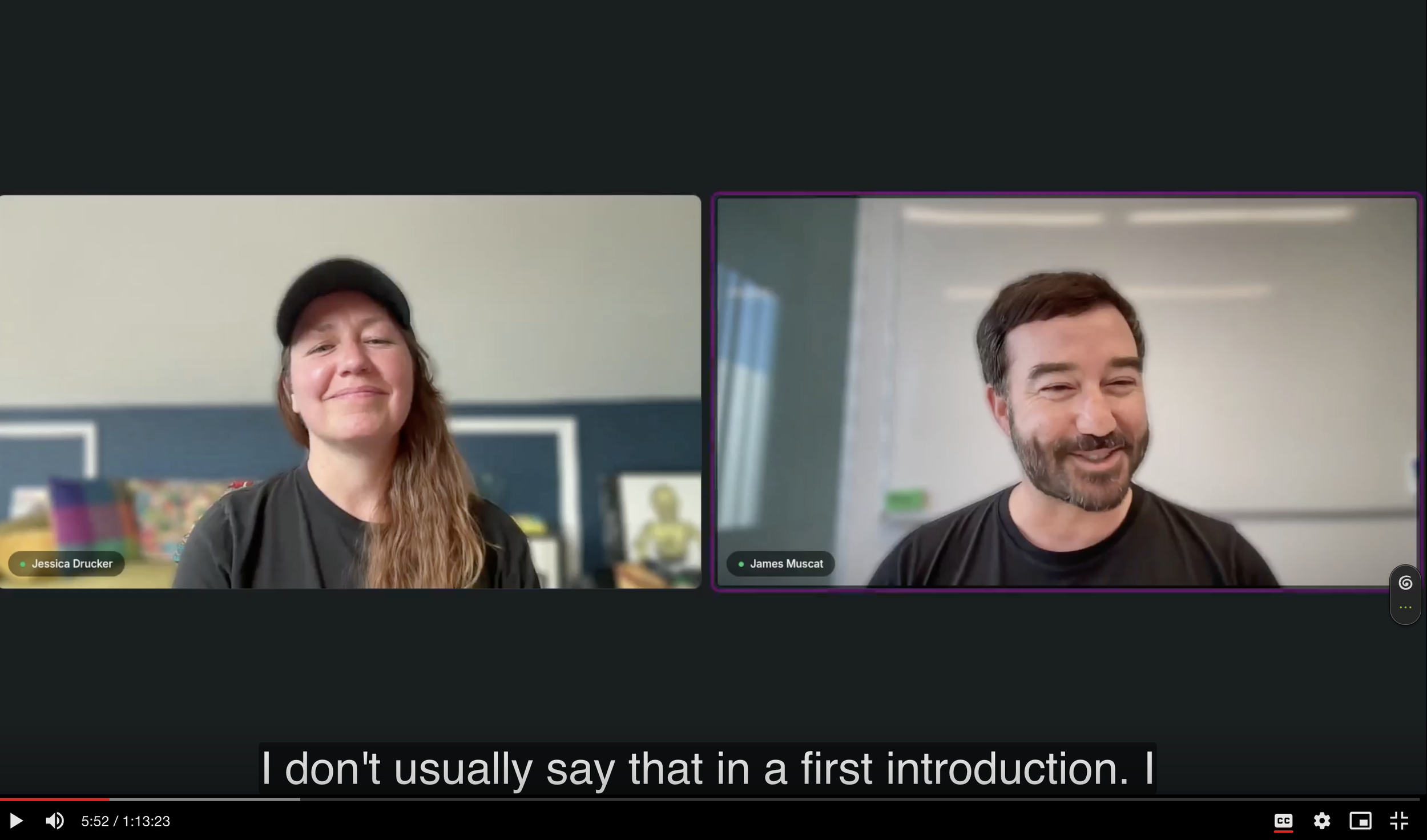
James Moscot is the founder of Moovin, a relocation firm based in Portugal that handles everything from the initial "should we even do this" conversation through immigration, housing, taxes, social security, and the part nobody talks about enough: helping people actually build a life once they arrive. James is a gay man who has been living in Portugal since 2001. His immigration lawyers are at the AIMA office so often they know the inspectors by name. He was there on March 25th with six Golden Visa clients in a single afternoon.
I sat down with James inside Quinn in April for a deep conversation about the real Portugal in 2026. Here is what I walked away knowing.
Portugal is still affordable. It is not ‘cheap’.
I want to say this first because it matters for how you plan.
When people started flooding into Portugal a few years ago, it was genuinely inexpensive. That is no longer true. A nice two-bedroom apartment in Lisbon is running around 2,200 euros a month. That is not New York. It is not Paris. But it is also not the dreamy bargain a lot of people are still imagining when they start googling.
This matters especially for the folks I work with, because queer people, and particularly queer people of color, trans people, and families where one partner has taken an income hit because of discrimination, are often working with less than their straight white counterparts at the same career level. That is not an assumption. That is just reality. So when I say "do the math before you fall in love with Lisbon," I mean it with love.
The good news: move 18 minutes outside of Lisbon to Costa Caparica — which is on the beach, by the way — and a two-bedroom drops to around 1,000 euros a month. Porto is more affordable than Lisbon and genuinely beautiful. Coimbra and Caldas da Rainha are even more so. The tradeoff is always proximity to a queer urban center, and that is a real conversation to have with yourself. How visible are you? How much community do you need around you day to day? There is no wrong answer, but there is an honest one, and you need to find yours before you fall in love with a cheap house in the countryside.
The visas: what's real in 2026
The D7 (the passive income visa)
The D7 is still one of the most popular pathways into Portugal for people who are self-directing their own move. It requires passive income — money that is not coming from you actively working: a pension, rental income, dividends, disability payments. The financial minimum is based on Portugal's current minimum wage, which sits at 920 euros a month. So roughly 11,000 euros a year for the main applicant, plus 50 percent for a spouse or adult dependent, plus 30 percent per minor child.
A few things I want to flag that James made very clear.
First: the Portuguese government wants to see a regular income stream. Having a big chunk in savings helps as supporting documentation, but it doesn't substitute for the flow of passive income. They want to know the tap is on, not just that you filled a bucket.
Second: if you are right at the minimum, have a reality conversation with yourself. Qualifying is not the same as thriving. Portugal's cost of living has gone up, and living at the edge of your means in a new country, without your usual support systems, is genuinely hard.
The D8 (the digital nomad visa)
The D8 is for remote workers who are earning active income from outside Portugal. The minimum is around 3,400 to 3,500 euros a month. And you need your employer to provide documentation saying you are authorized to work remotely from Portugal.
That last part is where most of my clients hit a wall. Getting a US employer to sign off on that is not always realistic.
What James shared — and what I found really useful — is that there is another path. Structure your own company, become an employee of that company, have the company serve clients from abroad. It requires an immigration lawyer and a tax advisor to do correctly, but it is a legitimate option that more people than you'd think are using.
The Golden Visa (for families who are not ready to leave yet)
This is the one I want to spend real time on, because it is the one that matters most for a specific group of people I talk to every week: parents of trans kids.
I have clients who sit down with me and say: we don't want to leave. We love our community. We have a great life. And then in the next breath they say: we don’t feel safe, we have no idea what the future holds for our queer kiddo (or as a queer parent), how do we get out as fast as possible?
The Golden Visa exists for exactly this situation, because you are building an exit strategy without ripping up your life first. It’s a very priviledged option, but if you can take it… it’s a good one.
You do not have to move to Portugal to hold a Golden Visa. The minimum stay is an average of seven days a year. You do not need to transfer your tax residency. But every year you hold that residency permit is counting toward citizenship. You are building toward something real, while still living your life at home, while still fighting for your family here.
Now — real estate was removed from the Golden Visa completely in 2023. That pathway is gone. What remains:
Investment funds, starting at 500,000 euros. This is real money that is actually working for you. There is potential for a return.
Donations to foundations with public utility status under Portuguese law, starting at 250,000 euros (or 200,000 if the foundation is in a lower-density area of Portugal). This money does not come back. You are donating it — to a project, maybe restoring 16th century tapestries, maybe funding craftsmanship schools in a historic monastery. The emotional return is real. The financial one is not.
One thing that surprises people: the Golden Visa covers your entire family under one investment. Main applicant, spouse, kids, adult dependents if economic dependence can be shown — all covered. The price doesn't go up based on the size of your family. That is a big deal if you're a family of five trying to figure out if you can afford a plan B.
The citizenship timeline question
The five-years-to-citizenship pathway that made Portugal so compelling is in flux. The current government has proposed extending it to seven years for EU and Portuguese-speaking country nationals, and ten years for everyone else. As of late April 2026, that proposal was sitting with the constitutional court for a second review. It may pass. It may not. James's team thinks there are elements that will be struck down as unconstitutional, but they're watching it closely.
My honest take: plan for uncertainty here. Do not make your decision entirely based on the citizenship timeline being five years. If the rest of the case for Portugal is strong for your family, the timeline is one input, not the only one.
What it actually feels like to be queer in Portugal
James came out while living in Spain. He told me that Portugal in 2001, when he first arrived, was "quite reserved." Spain had legal gay marriage by 2005. Portugal took longer, then moved fast, and has not stopped.
Today, Portugal's legal protections for LGBTQ people are genuinely strong. Malta is still considered the gold standard in Europe. Spain is ahead in some specific areas. Portugal is close behind and continuing to move forward.
But what James talks about when he talks about safety in Portugal is not just a list of laws. It is something harder to quantify. He described Portugal as "Pacific" — not passive, but peaceful. Human-centric in a way that shows up in small moments: the recognition at the coffee shop, the willingness to help, the genuine warmth in ordinary interactions. He feels safer walking the streets of Lisbon at night as a gay man than he does in parts of Melbourne, Australia, where he grew up.
When I hear that, I think about what so many of my clients tell me they're looking for. Not just legal protection — they want the floor to be higher. They want the worst case to be less bad. They want to walk into a government office, a hospital, a school, and not brace themselves.
That is what Portugal can offer. Not perfection. Not a place where nothing bad ever happens. But a social fabric where the undercurrent of violence that queer people are navigating every day in the US is genuinely lower. That is worth something real.
There is also mixing. James described going to bars and restaurants in Lisbon that are simply mixed — not a gay bar, not a straight bar, just a bar — where people are openly themselves. That kind of quiet normalcy is something a lot of my clients have never actually experienced. It is its own form of freedom.
The trans-specific reality: what I know and what I don't
I want to be honest here, because I think honesty is what parents of trans kids deserve.
The far-right Chega party has been pushing proposals that would affect trans rights in Portugal, including raising the age at which someone can legally change their name. James was not fully versed on the latest specific proposal when we spoke, and neither am I. What I will not do is give you false certainty on something that is still moving.
What I can tell you is this. Chega's leader ran for president. He lost, with roughly 33 percent of the vote, to the center-left António Seguro who won with about 67 percent. The far right is in parliament and making noise. They are also facing significant pushback from the public and from within parliament. The direction of the far right in Europe is shifting in the wake of Orbán's fall from power in April — James noted this, and I think it matters.
Portugal is not a perfect country. No country is. But it is a country where the loudest voices pushing anti-trans legislation are not winning, and where the social fabric is genuinely different from what a lot of my clients are living in right now.
For parents of trans kids who are not ready to leave but need to know a door is open: the Golden Visa was made for you. You do not have to go. You start the process. You hold the permit. You visit for a week a year. And you know that if you need to move, you have a path.
One more thing we talked about that I want to bring up: language as a power dynamic
We got into a conversation about language, since, it turns out, James speaks SEVEN langauges (!!!!). We spoke about whether you need to speak Portuguese. You can get by without it. James confirmed that. But you realy really shouldn’t. And here’s why: when you default to English in Portugal, you are changing the power dynamic. You are making the people around you operate in their second or third language. The effort to learn, even imperfectly, even just the basics, is a way of saying: I am not here to make the world adjust to me.
As queer people, we know what it feels like to be asked to adjust. To be the one who has to translate ourselves for someone else's comfort. Trying the language — even badly, even embarrassingly — is a small act of choosing not to do that to someone else.
I thought that was worth sharing.
Come have the longer conversation inside Quinn
James's full session — all the visa details, the AIMA timeline, the Golden Visa specifics, the conversation about Portugal's political direction — is inside Quinn as a full replay.
Quinn is our private membership community for queer people who are planning to move, in the middle of moving, or already living abroad. We bring in experts like James because the decisions you are making are too big and too specific to navigate from a Facebook thread or a YouTube video filmed two years ago.
If Portugal is on your list — in early research mode, seriously planning, or just needing to know the door is open — this is where the real conversation is happening.
Join us at quinncommunity.com.
James Moscot is the founder of Moovin, a full-service relocation firm specializing in Portugal, Spain, and Malta. Learn more at moovin.pt.